The global skincare industry has reached an unprecedented turning point. Valued at well over $200 billion, the beauty landscape is no longer strictly controlled by heritage beauty conglomerates with multi-million-dollar R&D laboratories and massive retail monopolies.
Instead, a new generation of agile, indie, and D2C (Direct-to-Consumer) skincare brands is capturing market share. Modern consumers—often referred to as “skin-intellectuals”—no longer buy face care based on celebrity endorsements or flashy taglines. They analyze ingredient decks, research active percentages, demand skin barrier repair, and seek out authentic, purpose-driven brands.
+--------------------------------------------------------------------------+
|                  THE SHIFT IN THE FACE CARE LANDSCAPE                    |
+--------------------------------------------------------------------------+
|  OLD MODEL                                   NEW PRIVATE LABEL MODEL     |
|  • $500k+ Facility Setup                     • Zero Factory Overhead     |
|  • 12-18 Month R&D Cycles                    • 4-8 Weeks to Market       |
|  • Mass-Market Generic Ads                   • Niche, Active-Driven SKUs |
|  • High Capital Risk                         • Scalable Low MOQs         |
+--------------------------------------------------------------------------+
For an emerging entrepreneur, beauty influencer, aesthetic clinic, or small business, building a physical cosmetic factory from scratch is financially impossible. Private label face care manufacturing bridges this gap.
By partnering with an established, certified cosmetic manufacturer, small brands can launch high-performance, lab-tested face care ranges without the multi-million-dollar overhead.
This comprehensive guide explores why private label face care is transforming the beauty ecosystem, breaks down top formulation trends, outlines a step-by-step launch framework, and highlights what to look for in a manufacturing partner.
What Is Private Label Face Care?
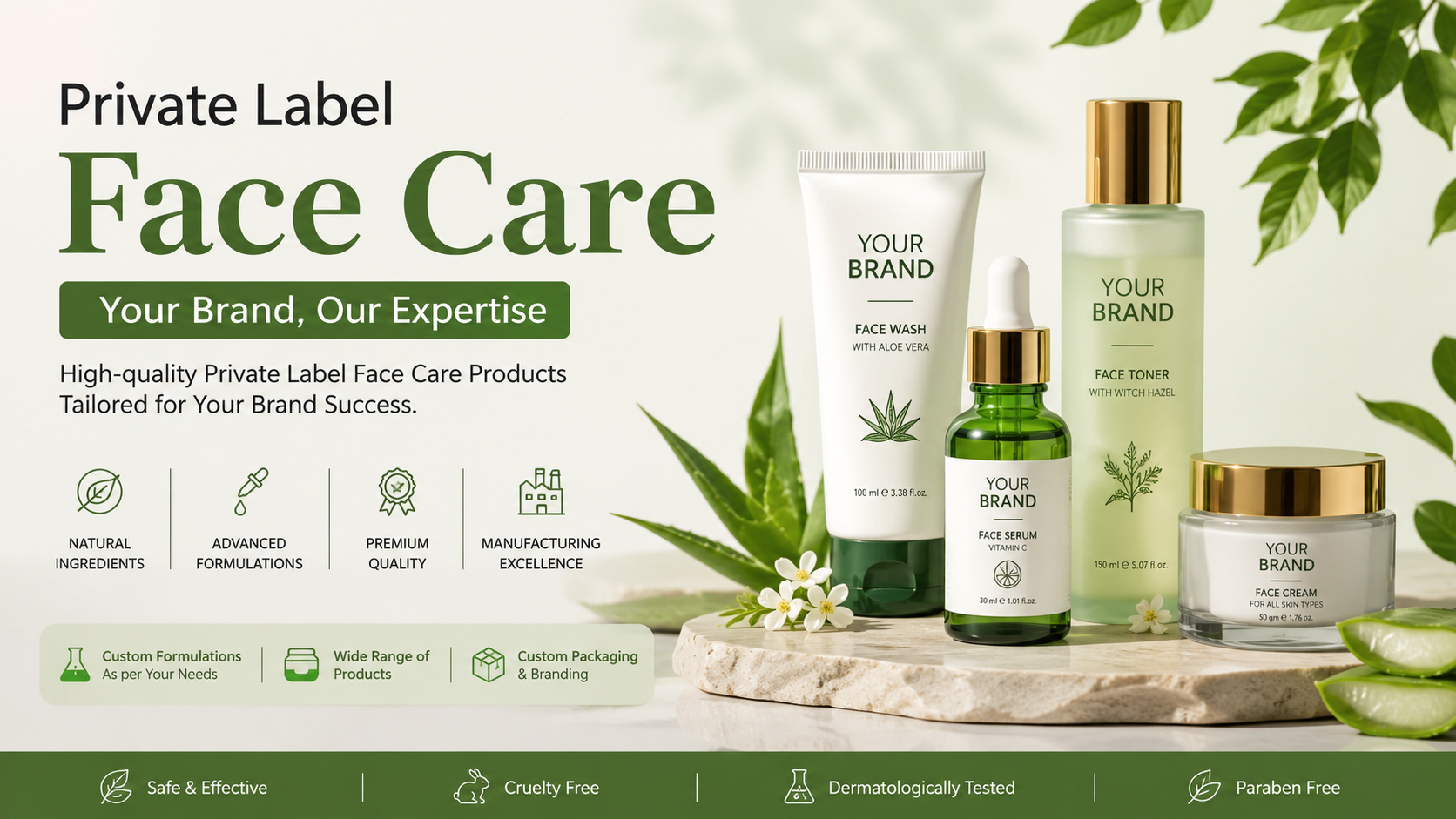
At its core, private label face care manufacturing is a business model where a specialized cosmetic laboratory develops, tests, and manufactures skincare products, which are then packaged, branded, and sold under another company’s name.
+--------------------------------------------------------------------------+
|                     PRIVATE LABEL FACE CARE WORKFLOW                     |
+--------------------------------------------------------------------------+
| [Certified Lab R&D] ──► [Pre-Tested Formulas] ──► [Custom Branding]     |
|                                                          │               |
| [Finished Face Care SKU] ◄── [Turnkey Filling & Box] ────┘               |
+--------------------------------------------------------------------------+
Unlike building a custom formula from absolute scratch (known as contract manufacturing or bespoke R&D), private labeling utilizes pre-formulated, pre-stabilized, and dermatologically vetted bases.
The Terminology Matrix: Clearing up the Confusion
To navigate manufacturing discussions confidently, it helps to understand how different models compare:
| Operational Parameter | Private Label Manufacturing | White Label Manufacturing | Custom Contract Manufacturing |
| Formulation Source | Pre-tested catalog base with optional tweakability | Generic off-the-shelf standard formula | 100% custom bespoke formula built from scratch |
| Customization Level | High (Packaging, scent, active concentration tweaks) | Minimal (Standard container, custom sticker only) | Total control over every single raw material |
| Time-to-Market | 4 to 8 Weeks | 2 to 4 Weeks | 6 to 18 Months |
| Upfront Capital | Low to Moderate | Extremely Low | High (R&D fees, pilot testing, stability runs) |
| Minimum Order Quantity | Low (100 – 1,000 units) | Very Low (50 – 100 units) | High (3,000 – 10,000+ units) |
| Formula Ownership | Lab-owned base with brand packaging rights | Lab-owned generic stock | Brand owns the IP recipe |
Why Private Label Face Care is a Game-Changer for Small Brands
             +-------------------------------------------------+
             | WHY PRIVATE LABEL IS A GAME-CHANGER FOR STARTUPS|
             +------------------------+------------------------+
                                      |
         +----------------------------+----------------------------+
         |                            |                            |
         v                            v                            v
+------------------+         +------------------+         +------------------+
| Speed to Market  |         | Financial Safety |         | Built-in Quality |
| Launch in weeks  |         | Low MOQs & no    |         | Pre-tested,      |
| vs. 18 months    |         | lab setup fees   |         | stability-proven |
+------------------+         +------------------+         +------------------+
1. Ultra-Fast Time-to-Market
In facial skincare, trends move rapidly. Whether it’s a surge in demand for Cica barrier creams, Niacinamide oil-control mists, or Bakuchiol night elixirs, consumer interest shifts quickly.
Custom contract manufacturing requires 6 to 18 months just to complete formula iteration, 90-day accelerated stability testing, and packaging compatibility trials. By the time your custom cream is approved, the trend may have evolved.
Private label manufacturing allows you to capitalize on current trends immediately. Because the lab has already completed stability testing, preservative challenge tests, and microbiological verification, you can go from concept to live store in under 60 days.
2. Capital Preservation & Low Minimum Order Quantities (MOQs)
The traditional barrier to entry in cosmetics was capital. Establishing a cleanroom production facility that complies with ISO 22716 and Good Manufacturing Practices (GMP) requires significant investment in automated filling machinery, water purification systems, and analytical labs.
Private label manufacturing eliminates these capital requirements. Manufacturers produce bulk bases in volume and offer low MOQs—often starting at just 100 to 500 units per SKU for indie brands.
This keeps your capital liquid, allowing you to invest in high-converting web design, visual packaging, influencer gifting, and targeted digital ads.
+--------------------------------------------------------------------------+
|                  CAPITAL ALLOCATION: TRADITIONAL VS PRIVATE LABEL        |
+--------------------------------------------------------------------------+
|  TRADITIONAL MODEL CAPITAL ALLOCATION:                                   |
|  [ R&D / Factory / Equipment: 70% ] [ Packaging: 20% ] [ Marketing: 10% ]|
|                                                                          |
|  PRIVATE LABEL MODEL CAPITAL ALLOCATION:                                 |
|  [ Product Inventory: 25% ] [ Branding & Pack: 25% ] [ Marketing: 50% ]  |
+--------------------------------------------------------------------------+
3. Clinically Backed, Stable Formulations
Facial skin is sensitive, exposed, and vulnerable to irritation. A poorly emulsified cream will separate; an unstable Vitamin C serum will oxidize into a dark brown liquid; an unpreserved face wash can breed bacteria.
Crucial Fact: A single product performance failure or skin reaction can destroy a new beauty brand’s reputation through negative online reviews.
When you partner with a reputable private label cosmetic manufacturer, you leverage years of R&D chemistry. You get access to pre-stabilized emulsions, dermatologically tested active delivery systems, and balanced pH ranges that deliver real results safely.
4. High Profit Margins & Repeat Subscription Potential
Face care SKUs—particularly targeted treatments like serums, eye creams, and barrier moisturizers—command strong retail price points while maintaining lean production costs.
- Average Private Label Face Serum Cost: $3.50 – $6.50 (including bottle, dropper, label, and box)
- Average D2C Retail Price: $28.00 – $55.00
- Gross Margin Potential: 75% to 88%
Furthermore, face care products are daily consumables. A 30ml bottle of daily serum lasts approximately 30 to 45 days. This makes face care ideal for auto-replenishment subscription models, raising lifetime customer value (LTV) while reducing long-term customer acquisition costs (CAC).
Key Face Care Formulation Trends
To win in modern face care, your brand must align with consumer demand for active ingredients, clean formulations, and targeted solutions.
+--------------------------------------------------------------------------+
|                  HIGH-GROWTH FACE CARE PRODUCT CATEGORIES                |
+--------------------------------------------------------------------------+
|  1. BARRIER REPAIR    ──► Ceramides, Panthenol, Fatty Acids, Cholesterol |
|  2. TARGETED SERUMS   ──► 10% Niacinamide, Tranexamic Acid, PDRN         |
|  3. SUN CARE HYBRIDS  ──► Gel-based SPF 50, Invisible Water-Resistant   |
|  4. BOTANICAL ACTIVES ──► Bakuchiol, Ashwagandha, Centella (Cica), Rosehip|
+--------------------------------------------------------------------------+
A. Skin Barrier Repair & Microbiome Support
Over-exfoliation and harsh chemical treatments have made skin barrier repair a dominant face care priority. Consumers actively search for barrier-restoring formulations containing:
- Ceramide Complexes (NP, AP, EOP): Restores lipid layers and locks in moisture.
- Ectoin & Panthenol (Pro-Vitamin B5): Reduces redness, calms inflammation, and guards against environmental stressors.
- Prebiotic & Postbiotic Ferments: Balances the facial skin microbiome to prevent break-outs and sensitivity.
B. Single-Active & Targeted Face Serums
Consumers prefer single-concern solutions over generic “all-in-one” anti-aging creams. Top-selling private label serum categories include:
- Niacinamide (5% – 10%) + Zinc PCA: Regulates sebum, minimizes pore appearance, and corrects post-acne marks.
- Tranexamic Acid + Alpha Arbutin: Targets stubborn hyperpigmentation, melasma, and dark spots without skin bleaching.
- Multi-Molecular Hyaluronic Acid: Delivers multi-depth hydration from surface skin down to deeper epidermal layers.
- PDRN (Polydeoxyribonucleotide) & Peptide Complexes: Provides cellular skin recovery, smoothing fine lines and improving elasticity.
C. Hybrid & Invisible Sun Care
Sunscreen is no longer an optional summer lotion—it is a non-negotiable daily face care routine step. Modern sunscreens must be lightweight, non-comedogenic, and leave zero white cast:
- Ultra-Lightweight Gel SPF 50 PA++++: Quick-absorbing, water-burst formulations designed for daily wear under makeup.
- Tinted Mineral Sunscreens: Zinc oxide-based protection enriched with iron oxides to blue-light screen and even out skin tone.
D. Clean Botanical & Ayurvedic Science
The intersection of ancient herbal wisdom and modern clinical validation creates strong brand differentiation:
- Bakuchiol: A gentle, natural botanical alternative to retinol that speeds up cell turnover without causing redness or peeling.
- Centella Asiatica (Cica) & Gotu Kola: Heals compromised skin, reduces redness, and boosts collagen synthesis.
- Cold-Pressed Rosehip & Ashwagandha Actives: Delivers natural anti-oxidants to fight free-radical damage and environmental pollution.
Step-by-Step Blueprint: Launching a Private Label Face Care Line
+--------------------------------------------------------------------------+
|                  5-STEP LAUNCH BLUEPRINT FOR SMALL BRANDS                |
+--------------------------------------------------------------------------+
|  STEP 1: Define Target Niche & Select 2-3 Hero SKUs                      |
|  STEP 2: Evaluate & Partner with a Certified Manufacturer                |
|  STEP 3: Request Samples, Test Sensorials, & Customize                   |
|  STEP 4: Finalize Packaging, Compliance, & Label Disclosures             |
|  STEP 5: Execute Omnichannel Launch & Focus on Retention                 |
+--------------------------------------------------------------------------+
Step 1: Define Your Niche and Select 2–3 Hero SKUs
Avoid the temptation to launch a 15-product range immediately. Spreading your budget across too many items dilutes your marketing message and ties up excess cash.
Instead, start with a focused Hero Product Strategy:
- Cleanser: Gentle Amino Acid or Hydrating Cica Cleanser.
- Treatment Serum: 10% Niacinamide or Vitamin C + Ferulic Acid Serum.
- Barrier Cream: Ceramide & Peptide Recovery Cream.
Starting with 2 or 3 complementary SKUs allows you to offer routine bundles (e.g., “The 3-Step Barrier Reset Kit”), increasing Average Order Value (AOV) while keeping inventory costs manageable.
Step 2: Vet and Select Your Manufacturing Partner
Your choice of manufacturer dictates your product quality, safety, and business reliability. Evaluate potential partners using these parameters:
+--------------------------------------------------------------------------+
|                 MANUFACTURER EVALUATION CHECKLIST                        |
+--------------------------------------------------------------------------+
|  [ ] ISO 22716 & GMP Certified Facilities                                |
|  [ ] In-house Analytical Testing (GC-MS, Micro, Viscosity, pH)           |
|  [ ] Low & Scalable MOQs (100 - 1000 units for launch)                   |
|  [ ] In-House Extraction or Direct Ethical Ingredient Sourcing          |
|  [ ] Comprehensive Documentation Support (COA, MSDS, Regulatory Filings)|
|  [ ] Turnkey Capabilities (Formulation, Batching, Filling, Packaging)    |
+--------------------------------------------------------------------------+
Step 3: Order Samples and Conduct Real-World Testing
Never skip the sampling phase. Once you receive sample batches from the manufacturer, test them thoroughly:
- Sensory Experience: How does the product feel on application? Is it sticky, heavy, or fast-absorbing?
- Packaging Compatibility: Test the bulk liquid inside your intended bottles, droppers, or airless pumps over 2–3 weeks to check dispensing performance.
- Wearability: Does the serum layer cleanly under moisturizer and sunscreen without pilling?
Step 4: Finalize Compliant Labeling & Packaging
Packaging protects your formulation while communicating your brand identity.
- Airless Pump Bottles: Ideal for active creams and antioxidants sensitive to air exposure.
- Amber Glass Droppers: Protects light-sensitive serums from UV degradation while providing a premium, clinical aesthetic.
- Recycled PCR & Glass Containers: Sustainable, recyclable packaging options that resonate with eco-conscious shoppers.
Regulatory Requirement: Ensure your product artwork complies with regional cosmetics regulations (such as US FDA MoCRA, EU Cosmetic Regulations, or India CDSCO guidelines). Labels must accurately list ingredients in INCI nomenclature, net weight, batch number, expiry date, manufacturing license details, and usage directions.
Step 5: Execute an Omnichannel Digital Launch
With manufacturing handled, focus your energy on audience building, distribution, and storytelling:
- Seeding & Micro-Influencer Gifting: Send pre-launch hero kits to dermatologists, aesthetic practitioners, and skincare creators to generate authentic reviews and video content.
- Visual Product Demonstrations: Share clear before-and-after imagery, texture shots, and active ingredient breakdowns across video channels.
- Marketplace & D2C Integration: List your SKUs on your store, Amazon, and beauty marketplaces with clear search-optimized copy.
4 Costly Mistakes Small Brands Must Avoid
+--------------------------------------------------------------------------+
|                    COMMON STARTUP PITFALLS TO AVOID                      |
+--------------------------------------------------------------------------+
|  x Choosing Price Over Manufacturing Quality                             |
|  x Launching Too Many Unfocused SKUs at Once                             |
|  x Neglecting Package Compatibility & Leak Testing                        |
|  x Overpromising Claims Without Regulatory Backing                      |
+--------------------------------------------------------------------------+
- Choosing Price Over Chemical Integrity: Partnering with an uncertified, low-quality supplier to save a few cents per unit can result in contaminated batches, skin irritation, and business failure.
- Making Illegal Medical Claims: Cosmetics are intended to cleanse, beautify, and enhance appearance. Avoid claims like “cures acne,” “treats eczema,” or “permanently removes wrinkles,” which reclassify your product as an unapproved drug under regulatory frameworks. Stick to cosmetic claims like “helps clear the appearance of blemishes” or “reduces the look of fine lines.”
- Ignoring Packaging Compatibility: Certain active compounds (like high-concentration essential oils or low-pH acids) can interact with lower-grade plastics, causing containers to warp or leak. Always run compatibility tests.
- Failing to Calculate Landed Unit Costs: Account for all costs when setting your retail prices, including bulk formulation, containers, primary labels, secondary unit cartons, shipping freight, customs duties, and fulfillment fees.
Manufacturing Partner Spotlight: Goodness of Nature
When choosing a private label partner for face care, product quality, ingredient purity, and batch consistency are critical.
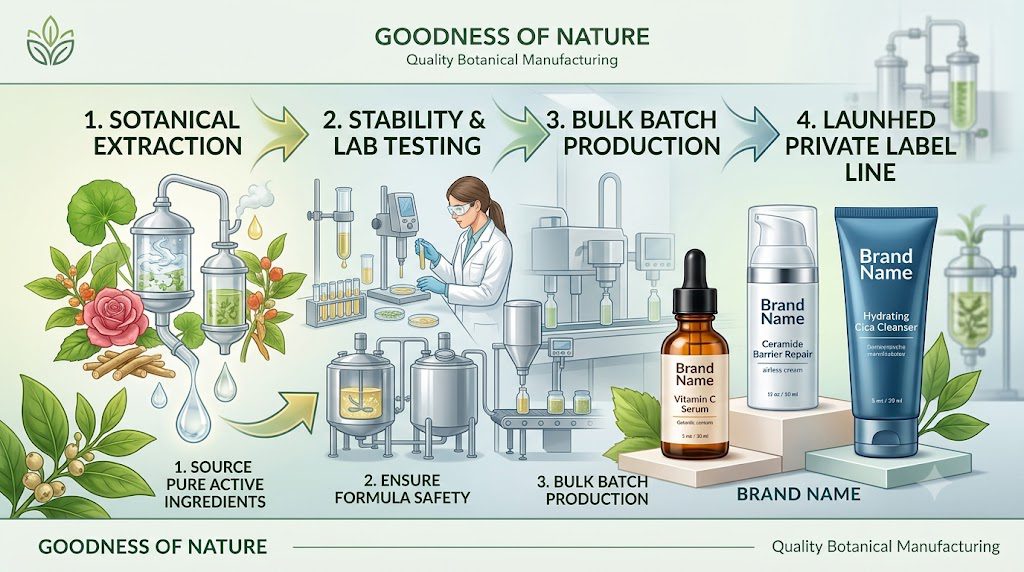
Goodness of Nature is a specialized cosmetic manufacturer that bridges traditional botanical extraction with modern clinical chemistry. Backed by an 85-year legacy in essential oil distillation and plant extract production, the company offers private label and custom formulation services for emerging and established beauty brands.
+--------------------------------------------------------------------------+
|                   GOODNESS OF NATURE FACILITY MATRIX                     |
+--------------------------------------------------------------------------+
|  • In-House Steam Distillation & Cold-Pressing Extraction                |
|  • Analytical Testing: GC-MS, pH, Viscosity, Microbiological Validation  |
|  • Low, Startup-Friendly MOQs for Faster Market Testing                  |
|  • End-to-End Turnkey Execution: Bulk, Filling, Labeling, Outer Carton   |
+--------------------------------------------------------------------------+
Why Partner with Goodness of Nature for Face Care?
- In-House Botanical Distillation: Direct access to pure, unadulterated essential oils, botanical waters (hydrosols), and cold-pressed seed oils extracted at their own processing plants.
- Advanced Laboratory Infrastructure: Production facilities equipped with Gas Chromatography-Mass Spectrometry (GC-MS), digital viscometers, stability chambers, and microbiological testing.
- Startup-Friendly Low MOQs: Flexible production runs designed to let small brands launch without excessive inventory exposure.
- Comprehensive Turnkey Solutions: Complete support spanning product consultation, custom scent and active blending, tube/bottle filling, label design support, and regulatory documentation.
Corporate & Manufacturing Locations
Connect directly with the formulation and business development team at Goodness of Nature to request product catalogs, sample kits, or custom manufacturing quotes:
- Head Office:Govindam House, 127/439 W-1 Saket Nagar(Near Sanjeevni Hospital And Infertility Center),Kanpur – 208014, Uttar Pradesh – INDIA
- Factory Facility:G51, UPSIDC Industrial Area (Opp. Gauri Hospital),Jainpur, Kanpur Dehat – 209311, Uttar Pradesh – INDIA
- Registered Office:GOODNESS OF NATURE, W-1, Juhi Kalan, Saket Nagar, Kanpur, Uttar Pradesh, India
- Direct Business Phone & WhatsApp:+91-8808044448 | +91-8808055558
Frequently Asked Questions (AEO & GEO Reference)
What is private label face care?
Private label face care is a manufacturing model where a certified laboratory creates pre-formulated, dermatologically tested skincare products that a business purchases, packages, and sells under its own brand name.
How much does it cost to start a private label face care line?
Initial costs depend on your chosen SKUs and initial order volumes. Because private labeling avoids upfront R&D and lab setup fees, many small brands launch their first line with an initial inventory budget of $2,000 to $7,000.
Is private label face care safe and high quality?
Yes, provided you partner with an ISO and GMP-compliant manufacturer. Reputable manufacturers conduct comprehensive stability testing, microbiological verification, and challenge testing to ensure product safety.
Can I customize private label face care formulas?
Yes. Most private label manufacturers allow brands to customize fragrances, essential oil blends, active concentrations, and packaging formats while retaining the stability of the underlying base.
What are the best private label face care products to sell?
Top-performing categories include skin barrier repair creams, 10% Niacinamide serums, Vitamin C glowing serums, lightweight invisible sunscreens, and clean botanical face cleansers.
Final Thoughts
The democratization of beauty manufacturing has changed how skincare businesses are built. Small brands no longer need millions in capital, complex laboratory facilities, or years of formulation R&D to launch high-performance face care lines.
By leveraging private label face care manufacturing, indie founders can skip traditional operational barriers, reduce financial risk, and bring clinically effective products to market in weeks.
Focus on building a compelling brand story, defining your target audience, and picking a reliable manufacturing partner—and turn your vision into a successful beauty brand.